Three Markets, One Question
Stocks, bonds, and the dollar can tell you whether a shock is supply or demand — the one thing an inflation number can’t. What they’re saying about the 2026 energy shock.

Headline PCE inflation, released today, printed 4.1% in May, the highest since 2023. A week before that, the new Fed chairman stood up and committed the institution, in the plainest words it has used in years, to “deliver price stability” — a rate cut taken off the table, a hike put on it.
So the call looks easy. The number is high and rising, the chairman has drawn his line: tighten.
Maybe. Or maybe that 4.1% is the worst number to set policy by, because a single inflation reading can’t answer the one question that decides everything. Is the economy overheating, or did something just get more expensive to produce?
The two look identical in the index but demand opposite responses. Overheating demands tighter money. A cost, or supply, shock — an oil spike, a war, a closed strait — demands the opposite: look through it.
Read the wrong one and you tighten into a supply shock, which is how a price spike turns into a recession.
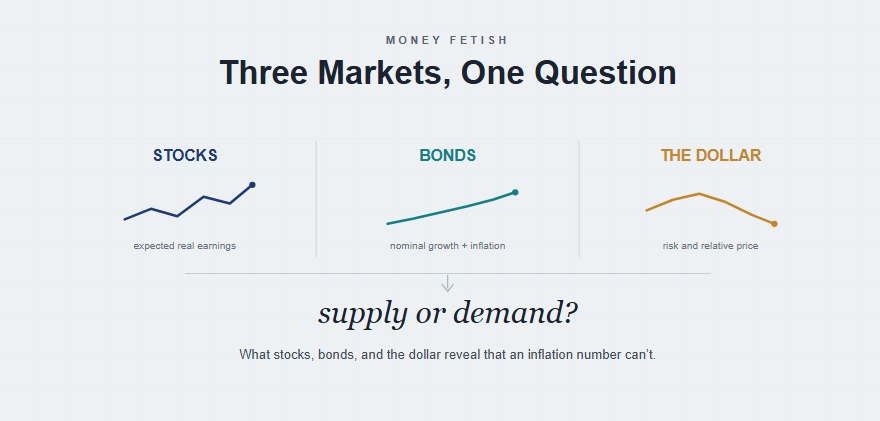
The inflation print won’t tell you which case you’re in. Three markets will. Stocks, bonds, and the dollar each price a different piece of the question, and the way they move together leaves a fingerprint — supply or demand — that no price index can show. Run this month through it, and the markets say something the chairman’s promise does not.
What’s below the paywall:
The cross-check hiding inside the inflation data — headline vs. core — and what May´s PCE wedge actually says.
The single best supply-versus-demand signal in markets: why the stock–bond correlation flips sign, and which way it points today.
How to split the bond market’s yield into its real and inflation halves, and watch a supply shock get priced in real time.
What the dollar adds — and the one divergence that means risk premium, not strength (it’s been flashing since early 2025).
The full truth table, four illustrative charts, and the verdict for mid-2026: what the three markets say the Fed should do while it promises “price stability.”
